In the IBM System / 360 (S / 360), April 7, 1964, announced by IBM on, and this was the first complete family of applications designed to cover a range of computers in 1965 and 1978, delivered a mainframe computer system from a small family both commercial and scientific. IBM-compatible design, allowing it to release a set of design at different prices, a clear distinction between architecture and applied arts. 8-bit bytes and resolve binary, decimal, and (hex) floating-point calculations, which featured the most expensive systems used microcode to implement compatible model 44 and a set of instructions, but not all.
In 1964, a slow announced System / 360 model, the model 30, 8 to 64 KB with memory, speeds of up to 34,500 policy can accomplish. High-performance models came later. A main memory is more common in large-unusual amount of load a little, even though in 1967 IBM System / 360 Model 91, a main memory, 8 MB can have 360 models can second.The 16.6 million in direction to the main storage 256 KB; But 512 KB; The KB 768 KB 1024 or more were common. Slow (8 microsecond) large storage capacity (from LCS) up to 8 Mbps was also available.
System / 360 customers application software and peripheral devices, or if you have a growing interest in replacing the reprogramming was not always up to the transfer of knowledge was very successful in a smaller system, allowing it to buy the market. In the coming years, a lot of influence on computer design, design history, consider one of the most successful computers.
System / 360 was the chief architect Gene Amdahl; The project is Fred Brooks, who managed to start Watson's lieutenants, John R. Opel, Chairman Thomas J. Watson, another was conducted had claimed responsibility Jr.The commercial rollout in 1964 IBM's System 360 mainframe family.
System / 360 software (application with some restrictions) is to maintain compatibility with the present system, z servers.
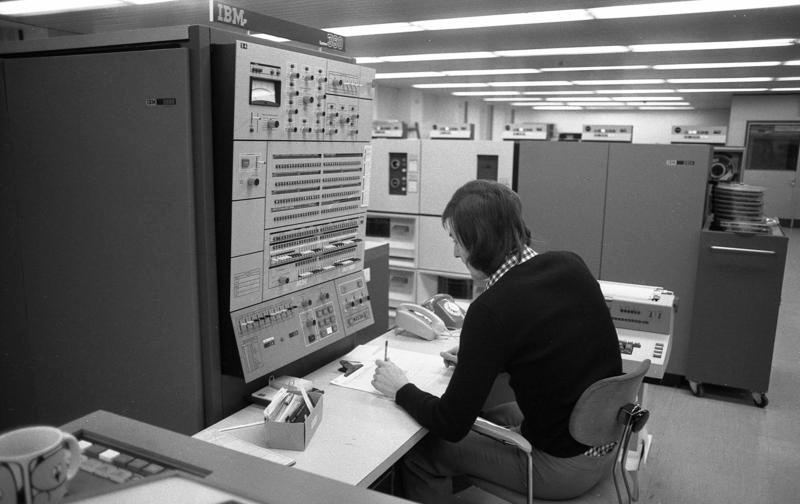
A Family of computers:
In contrast with the time-to-normal industry practice, IBM, all (except for two specific markets) using the same set of instructions to a high performance and low, large, and created an entire series of computers. This feat allowed customers to use the model at a cheaper cost and time needed changing and growing as a software upgrade, and then the larger system. The biggest, the fastest, hard-wired logic, but rather models of IBM, widely varying performance computers to exploit microcode was the first manufacturer to apply the technology to a compatible range.
This greatly lowering obstacles to freedom. (Except of course on ICT) had to choose between with other providers, clients may outgrow the capacity of their machines and bumps (and very expensive) equipment. This means that many companies only had to buy computers.
Models:
IBM first announced a series of six computers and forty common peripherals. IBM later than four models, including for rare one-off models, and gave up. The least expensive model of core memory as a model with 4 KB 20, eight 16-bit true than in the 360s and six 32-bit register of the register, and the rest of a school that uses a subset of the set range.
In 1964, the first ad aimed at the market, the first three IBM 1400 series of small-and medium-range system models 30, 40, 50, 60, 62, and 70 are included. All three first-half of 1965 was sent. Respectively, beginning in November 1965 and January 1966, which set out a series of 7000 machines, and 65 and 75 had never been replaced, intended to replace the last three.
Low-end models later addition (above 1966) 20, 22 (1971), and 25 (1968) included. Model 20 was a number of sub-models; Sub-model 5 model was higher at the end. Model 22 was a minor model with a capacity of 30 recycled, and 30 in the usual low-memory configuration for a small high-capacity disk and tape only with devices and slow I / O channels ,.
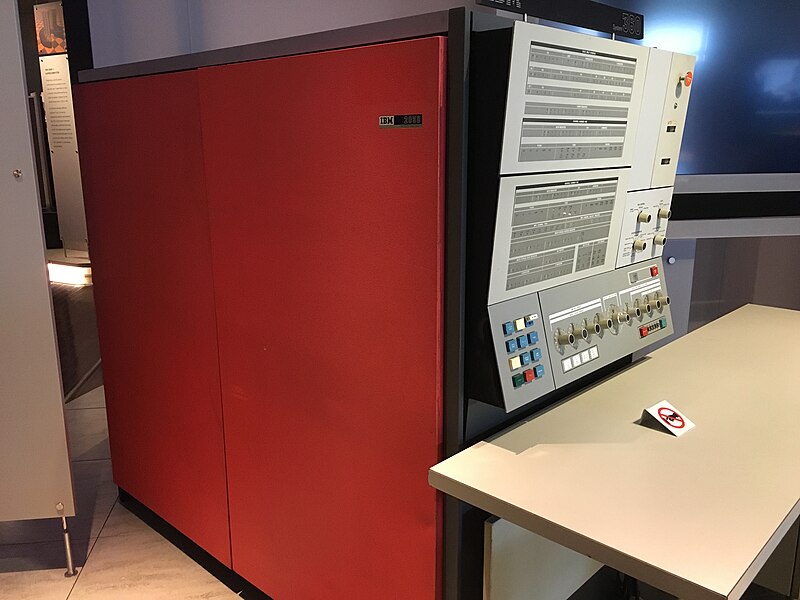
(1966) to remove the model 44 with some additional guidelines to identify scientific computing and real-time process control to calculate and set a unique model, it was all storage-to-storage instructions and the five other complex instructions.
In the IBM System 360 Model 91 operator console This image, taken less than in the 1960's at the end of time.
A series of high-end machines 67, 85 (1969), 91 (1967, 92, as expected), 95 (1968), and (in 1966, 64 short and 66 [6] as excited, below) model included 195 (1971). 85 Design / 370, System / 360 line and was based on the monitoring system of the medium and 370/165. There, a System / 370 version was the 195, but did not include Dynamic Address Translation.
The implementations on a variety of oral using native data path widths, microcode, or lack of high-level varies, yet they were very compatible. Unless specifically documented, were architecturally compatible to models. 91, for example, if you trade in your used digital collection policy was designed to read scientific computing and out-of- order to provide policy performance (and a number of policy occurred while the trap program, "he continued transparency" could yield), but lacked was applications. New features can be added without violating interpretations Building, 65 inter-CPU dual-processor version of the message (M65MP) for extensions; 85 introduced a temporary memory. Models 44, 75, 91, 95, 195 and practical reality rather than with logic and other models as microcoded.

August 1965 announced the Model 67, the first product to provide dynamic address translation system was IBM hardware to support sharing. "DAT" is now more commonly referred to as an MMU. Experimental one-off unit 67 is built before the model was based on 40., IBM, models 64 and 60, and 62 66, DAT versions were released, but at the same time the 67 was replaced with 60 at the beginning of this column, but absent and 62, 1972 the S / 370 would reappear in a series of 65. replace DAT hardware. Like its close relative, 65, 67, also offered dual CPUs.
All the IBM 1977 System / 360 models are no longer in the market.
Backward compatibility:
IBM now had a large investment in software to be executed on the second generation of machines by customers. Many models unique combination of hardware and microcode special cases to a policy used in a program using the client took the initiative and took the computer option (for example, Model 30 or Model 65 series in 1400) IBM on IBM 7094, offered the target system, the old programs can run on the new machine, so . However, customers had to install a halt and took a computer program. [9] Model 85 and later System / 370, the options they have been captured, but allowed for the implementation of operating under the control of native programs side by side with them.
Successors and variants:
System (except Model 20) / 360 system compatible with the 1970/370 range and has been replaced by model 20 was the target users to run IBM System / 3. (The idea of the cost of a major breakthrough with the FS-technology, efficiency and sustainability of the reasons has been rejected in the mid-1970s.) Later, IBM compatible systems in 3090, the ES / 9000 family, 9672 (System / 390 family), include zSeries System z9, system z10 and IBM zEnterprise system.
System or machine code often the same or equivalent in terms of building the computers / 360 Amdahl's 470 family (and successors), Hitachi mainframes, to the Facom to RCA Spectra 70 series, and as UNIVAC 9000 is contained in a series of Fujitsu System.The English Electric System 4 machines RCA was made under license. Then they RCA UNIVAC series of 70 UNIVAC 9000 series, and also a series of 70.The successors to the Soviet Union as the UNIVAC, where a System / 360 clone, a series of 90 product development, became the first EVM UNIVAC, but sold the series to Spectra.
In 1975, introduced the IBM 5100 portable computer, an option offered for the implementation of the System / 360's APL.SV language program via a hardware emulator. IBM to avoid the cost and delay to create a 5100-based version of APL used this technique.
Special radiation-hardening slightly if they are used in a number of fighter bombers and fighter planes, System / 4 Pi Avionics in the form of a computer system / modified 360s. The full 32-bit version of AP-101, 4 Pi machines (five-node) on the abuse-resistant Space Shuttle served as the system replicated computing nodes. The US Federal Aviation Administration in the 1990's through the 1970's from the IBM 9020, changed the air traffic control system / 360s various clusters, surgery. (Some still looks like 9020 will be used by the software took on new hardware.)

No comments:
Post a Comment